Custom Car Parts Manufacturer — Automotive Components & Accessories
Custom machined car parts, accessories and performance components manufactured to your exact specification.
We manufacture custom car parts to your drawing, CAD file or sample — from precision CNC-machined brackets and mounting hardware to branded interior trim, exterior accessories and performance components. Every part is produced under a documented quality process and inspected before packaging.
Custom Car Parts Manufacturing: Scope & Capabilities
We are a custom car parts manufacturer working with automotive brands, importers, distributors and tier-1 suppliers. Our role is to take a defined requirement — a drawing, a worn part, or a product concept — and turn it into repeatable production batches that match the approved sample.
We do not sell a fixed catalogue. Each program starts from your specification, which is why the same factory can produce a hidden structural bracket for one customer and a mirror-polished exhaust tip for another.
Categories We Manufacture
Our automotive work clusters into four groups, each with its own material, tolerance and finishing priorities:
- Structural and functional hardware — brackets, mounts, spacers, fasteners and chassis fittings
- Interior components — trim pieces, knobs, handles, bezels and compartment hardware
- Exterior accessories — lighting mounts, guards, covers and body-side fittings
- Performance and appearance parts — exhaust hardware, tips and branded emblems
How a Custom Car Part Program Runs
- You send a drawing, CAD file, physical sample or written requirement.
- Our engineers review manufacturability and propose material, tolerance and finishing options.
- We prototype so you can check fit, finish and function before committing to tooling.
- Production runs with in-process checks at defined stages.
- Every batch passes final inspection against your approved sample before packing and export.
If you already have a complete specification, the process usually starts at step 3. If you are still defining the product, we can support the design work as well.
Automotive Parts Built to Your Drawing or Sample
The table below maps the main automotive component groups to how they are typically produced and where they are used.
| Component group | Typical process | Common application |
|---|---|---|
| Brackets, mounts and spacers | CNC machining, sheet metal forming | Engine bay, chassis, interior mounting |
| Fasteners and small machined parts | CNC turning and milling | Assembly, trim attachment, panels |
| Interior trim, knobs and handles | Machining, injection molding, die casting | Cabin, console, door panels |
| Exterior accessories and lighting mounts | Machining, forming, casting | Body exterior, lighting, trim |
| Performance hardware and exhaust components | CNC machining, polishing | Exhaust systems, tuning applications |
| Badges, emblems and branded parts | Die casting, machining, engraving | Branding on body, cabin or engine bay |
CNC Machined Brackets, Mounts & Fasteners
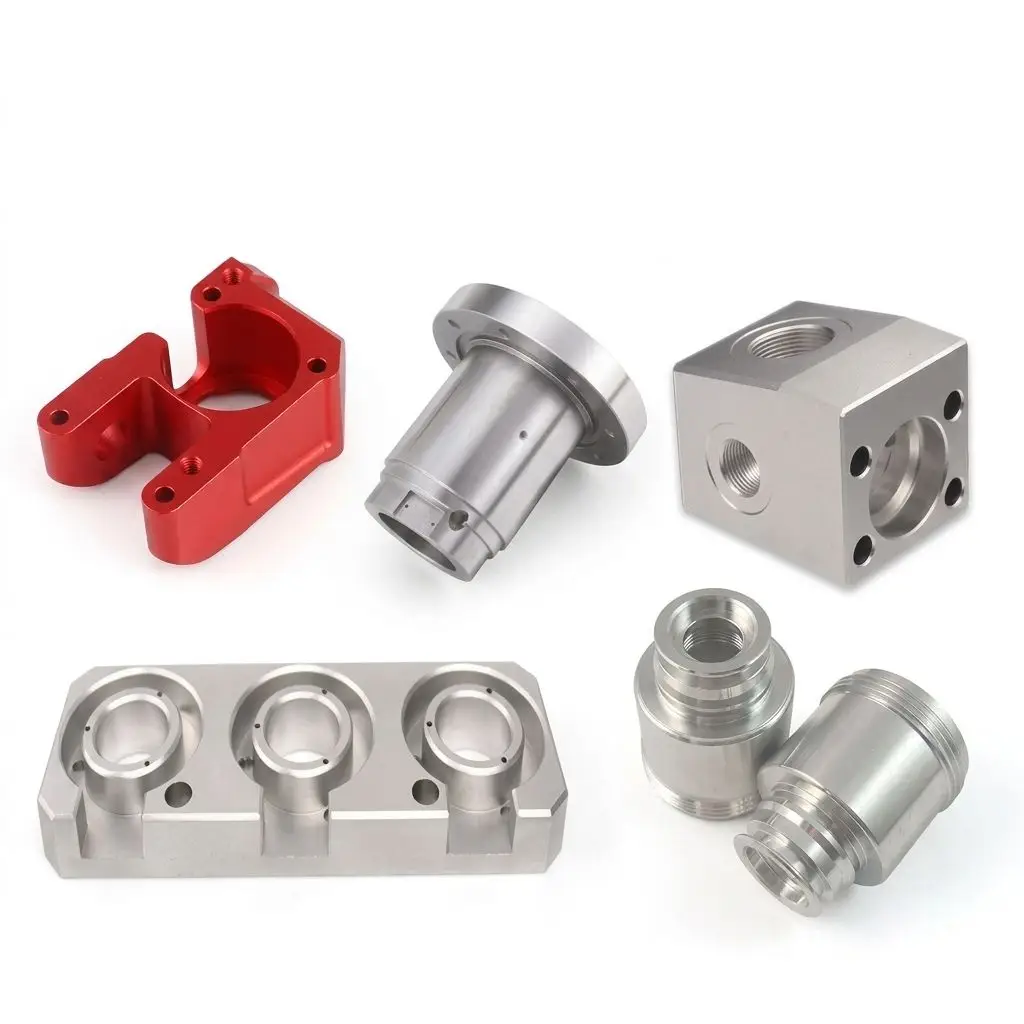
CNC machining covers most structural car components we produce. Parts are machined from aluminum, stainless steel, brass or engineering plastics depending on the load and the environment they sit in. Standard machining tolerance is ±0.05 mm, with tighter tolerances available where the function requires it.
Interior Trim, Knobs & Handle Hardware
Interior parts are usually judged on appearance and tactile quality as much as on dimension. We produce knobs, handles, bezels, trim clips and compartment hardware in machined metal, die-cast zinc alloy or molded plastic, with finishing selected to match the surrounding cabin materials.
Exterior Accessories & Lighting Mounts
Exterior components face UV, moisture, road salt and temperature cycling. Material and finish selection matters more here than on interior parts — anodized aluminum and coated steel are common choices, and we match existing finishes by sample or color reference when the part sits alongside factory hardware.
Performance & Exhaust Components
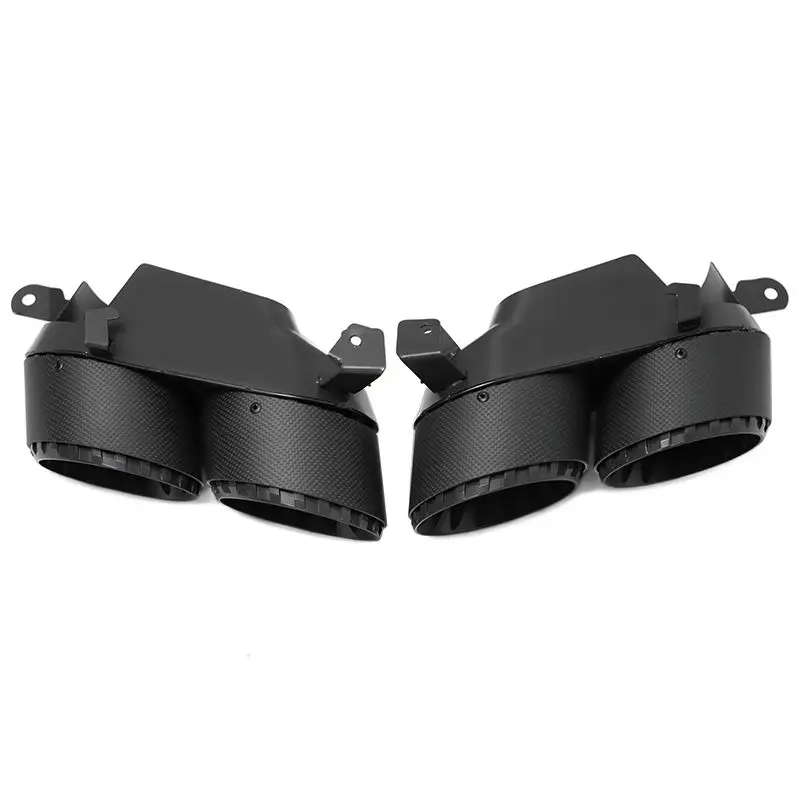
Performance and appearance parts carry a different requirement: they are usually visible, and often carry the customer’s brand. We machine and polish exhaust hardware and tips, produce lightweight replacement components, and manufacture emblems and badges with laser engraving or cast-in branding.
Because these parts are seen, finishing consistency between batches matters as much as dimensional accuracy. Finishing is verified against the approved sample on every run.
Load, Heat and Corrosion Environments
A car part’s environment determines its material more than any other factor. The same bracket shape behaves differently in an engine bay, on a body panel and inside a cabin.
Which Material for Which Environment
| Environment | Operating conditions | Typical material choice |
|---|---|---|
| Engine bay | Sustained heat, vibration, oil and fluid exposure | Aluminum 6061 / 7075, stainless steel 304, steel |
| Exterior body | UV, rain, road salt, temperature cycling | Anodized aluminum, stainless steel 304 / 316, coated steel |
| Interior cabin | Abrasion, cleaning agents, appearance-critical | Machined aluminum, zinc alloy, engineering plastics |
| Underbody and chassis | Load, shock, moisture, debris impact | Steel, stainless steel, forged or machined aluminum |
| Performance and exhaust | High temperature, visible finish | Stainless steel, polished aluminum |
How We Decide
We start from the worst condition the part will see, not the average. If a component spends its life in a dry cabin but is cleaned with solvent weekly, that cleaning cycle drives the finish choice. This is the kind of decision our engineers walk through with you during the review stage.
Materials & Surface Finishing
Aluminum — 6061 / 7075
Aluminum is the default for lightweight structural parts and for anything that needs a clean anodized finish. 6061 offers a good balance of strength, machinability and cost; 7075 is used where higher strength is required and the part justifies the cost difference. Anodizing gives both corrosion protection and a range of colors suitable for visible parts.
Stainless Steel — 304 / 316
Stainless steel is used for fasteners, brackets and exposed hardware where corrosion resistance is the priority. Type 304 covers most automotive exterior needs; type 316 offers higher resistance where the part is exposed to road salt or coastal conditions. Machined stainless can be polished, brushed or left with a machined finish.
Steel, Brass and Engineering Plastics
Steel is used for load-bearing components, typically with zinc plating, galvanizing or powder coating for corrosion protection. Brass provides good machinability and an appearance suitable for decorative trim. Engineering plastics cover interior parts, clips and components where weight, cost or electrical insulation matter more than metal strength.
Finishing Options
| Finish | Appearance | Typical use |
|---|---|---|
| Anodizing | Matte to satin, colored | Visible aluminum parts, interior and exterior trim |
| Powder coating | Opaque, textured or smooth | Brackets, guards, structural parts |
| Polishing | Bright, reflective | Exhaust tips, visible hardware |
| Zinc / nickel plating | Metallic, protective | Fasteners, steel components |
| Laser engraving | Contrast marking | Branding, part numbers, emblems |
| Die casting as-cast or machined | Crisp detail | Emblems, badges, small housings |
Material certificates are available on request, and we can work to REACH / RoHS requirements where your market requires it.
How Custom Manufacturing Works
Custom car parts manufacturing follows the same defined workflow on every program:
- Inquiry and engineering review. You send a drawing, sample or concept. Engineers assess manufacturability and reply with a detailed quotation, typically within 24 hours on business days.
- Prototype and sample approval. We produce a prototype for fit, finish and function checks. You iterate until the specification is locked.
- Tooling and production setup. Where tooling is required, it is built or modified and a first-article inspection is run before full production.
- Production and in-process control. Production runs with inspection at defined checkpoints so deviations are caught during the run, not after it.
- Final inspection and packaging. Every batch is inspected against your approved sample or specification, then packed for export with custom packaging and private label where required.
- Shipping and after-sales. We handle export documentation and arrange EXW, FOB, CIF, DDP or air freight as agreed.
We support OEM manufacturing from your drawings, ODM where we develop the product for you to rebrand, and prototype development for new programs. Minimum order quantity is flexible and depends on the part and process — prototype runs are viable, and volumes scale from there.
Who We Supply
Our automotive customers typically fall into four groups:
- Aftermarket and performance brands developing their own product lines who need manufacturing without owning a factory
- Importers and distributors building a range of parts under their own label
- OEM and tier-1 suppliers outsourcing specific components to a documented supply partner
- Vehicle builders and modifiers needing one-off or small-batch custom parts for specific projects
Founded in 2006, we now operate a 1,350㎡ facility with a 28-person team including 12 engineers, producing over 6,000,000 pieces a year for customers in more than 40 countries and regions. Our quality management system is ISO 9001:2015 certified.
Buying Guide: Sourcing Custom Car Parts
If you are evaluating a custom car parts manufacturer, these are the points that most often decide whether a program runs smoothly.
Confirm the manufacturer can actually produce your part. Different components need different processes — CNC machining for brackets and precision hardware, die casting for high-volume small parts, sheet metal forming for panels, and the right finishing line for the surface you need. Ask for examples close to your component, not a generic capability list.
Ask how quality is controlled across batches, not just on the sample. A good first sample is the baseline, not the proof. Ask what happens at incoming material inspection, during production, and before packing — and whether they will hold tolerances against your approved sample on repeat orders.
Understand what drives your price and lead time. Material, tolerance, finishing and tooling each move the number. A manufacturer who can explain which of these dominates your part is easier to work with than one who only quotes a total.
Check the sampling path before committing to volume. Prototyping first is the cheapest point to catch a design problem. Confirm how long samples take and whether you can approve before tooling is locked.
Test the communication, not just the product. A program involves drawings, revisions, approvals and shipping documents. A single point of contact who replies within a defined window is worth more than a marginally lower unit price.
For a more detailed evaluation framework, see our guide on how to choose a custom car parts manufacturer.
FAQ
What materials do you machine for car parts? We work with aluminum 6061 and 7075, stainless steel 304 and 316, steel, brass, zinc alloy and engineering plastics. The choice is driven by the part’s load and its environment — an engine-bay bracket and an interior trim piece rarely use the same material.
What tolerances can you hold? Standard machining tolerance is ±0.05 mm. Tighter tolerances are available where the function requires them; we confirm the achievable tolerance for your specific geometry during the engineering review rather than quoting a blanket figure.
Can you produce from a sample instead of a drawing? Yes. We can reverse-engineer from a physical sample when drawings are unavailable, and we will confirm dimensions and material assumptions with you before production.
How does engine-bay heat affect material choice? Sustained heat and fluid exposure rule out most plastics and untreated aluminum for structural parts. Steel and stainless steel are common for heat-exposed structural components, with aluminum used where weight matters and the temperature is within its range.
Do you apply customer branding? Yes. Laser engraving, cast-in logos and printed marking are all available. Branding is applied to the approved position and depth on the sample before production runs.
What is the minimum order quantity for a custom car part? MOQ is flexible and depends on the part and process. Prototype runs are viable for evaluation, and production volumes scale from there. The practical minimum is driven by tooling rather than by a fixed company-wide number, so send your drawing for a specific answer.
Can you match the finish of existing factory hardware? Yes. We match finishes by sample or color reference across anodizing, powder coating, polishing and plating. This is common when a custom part sits alongside factory components on the same vehicle.
How is my design protected? We work under NDA on request and can counter-sign yours. Tooling and designs remain under our protection and are not used for other customers.
Related Products
- Custom CNC Machined Car Parts — precision brackets, mounts and hardware to your drawing
- Performance Exhaust Tips & Hardware — polished stainless tips and exhaust components
Related Applications
These components are most often specified for performance and tuning builds, where tolerance and finish both matter, and for general vehicle modification where a part must sit alongside factory hardware.
Related Resources
- How to Choose a Custom Car Parts Manufacturer — a practical evaluation checklist
- Materials Guide for Automotive & Marine Parts — how aluminum, stainless and plastics compare
- How Custom Vehicle Parts Are Made — the process from design review to delivery
Request a Quotation
Send your drawing, CAD file or sample and our engineering team will reply with material options, achievable tolerances and a detailed quotation. Tell us the vehicle application and the environment the part will operate in, and we will propose a material and finish to match.
Request a quote — or attach your files directly using the form on this page. We reply within 24 hours on business days.
Sample products
Request a quotation
Send your drawing or sample and our engineering team will respond within 24 hours with a quotation.
- Engineering review within 24 hours
- Free DFM (design-for-manufacturability) feedback
- NDA available on request
Your data is encrypted in transit and never shared with third parties.