Custom Yacht Parts & Accessories Manufacturer — Bespoke Hardware & Fittings
Yacht hardware, fittings and interior accessories, custom manufactured to high-end finishing standards.
We manufacture yacht hardware and accessories with precise machining and high-polish finishing — interior fittings, deck hardware, rail components and bespoke parts for refits and new builds. Each component is produced to drawing or sample and matched to the vessel’s existing finish standard.
Yacht Parts & Accessories Manufacturing: Scope & Capabilities
We are a custom yacht parts manufacturer working with yacht builders, interior fit-out companies, refit yards and marine hardware distributors. Our role is to produce hardware that meets a defined finish and fit standard on every unit, not only on the first sample.
Yacht work differs from general marine manufacturing in one decisive respect: the hardware is on display. A deck cleat on a working boat is judged by whether it holds. The same cleat on a yacht is judged by whether it matches the fittings beside it. That shifts the engineering priority toward finish consistency, edge quality and repeatability across a set.
Categories We Manufacture
- Interior hardware — cabinet fittings, handles, hinges, latches and drawer hardware
- Deck hardware — cleats, fairleads, bollards and deck fittings
- Rail components — rail fittings, stanchion bases, tube connectors and brackets
- Decorative hardware — trim pieces, escutcheons and custom detail components
- Bespoke components — one-off and small-batch parts for refits and custom builds
How a Custom Yacht Part Program Runs
- You send a drawing, CAD file, sample or reference photograph with dimensions.
- Our engineers review the design against the finish and fit requirement.
- We produce a prototype for approval, with the finish applied as it will appear in production.
- Production runs with finish inspected against the approved reference.
- Every batch is inspected and packed with surface protection before export.
On yacht programs the prototype is an approval instrument, not a formality. Finish appearance, edge quality and the feel of the mechanism are all confirmed at that stage, because they cannot be corrected later in the process.
Where Yacht Hardware Is Judged: Fit, Finish, Consistency
The Finish Is Visible Every Day
Yacht hardware is touched, handled and seen continuously. A polished surface shows every scratch, every inconsistency in grain direction, and every variation in color between units. Finish quality is therefore a specification item with defined acceptance criteria, not a final cosmetic step.
Consistency Across a Fit-Out
A yacht interior may contain dozens of identical fittings across multiple cabins. Any variation between them is immediately visible. Achieving consistency depends on controlled polishing parameters, tooling that does not wear between units, and inspection against a physical reference sample rather than a verbal description.
Fit Without Adjustment
On a high-end fit-out, hardware is expected to install without on-site modification. That places a premium on dimensional accuracy and on prototyping against the actual assembly, so the interface between component and substrate is correct before production.
Yacht Hardware & Accessories We Manufacture
| Component group | Typical process | Common application |
|---|---|---|
| Interior hardware and cabinet fittings | Die casting, machining, assembly | Cabinetry, wardrobes, wet bars |
| Deck cleats, hinges and latches | Casting, machining, polishing | Deck operation, cabin doors, hatches |
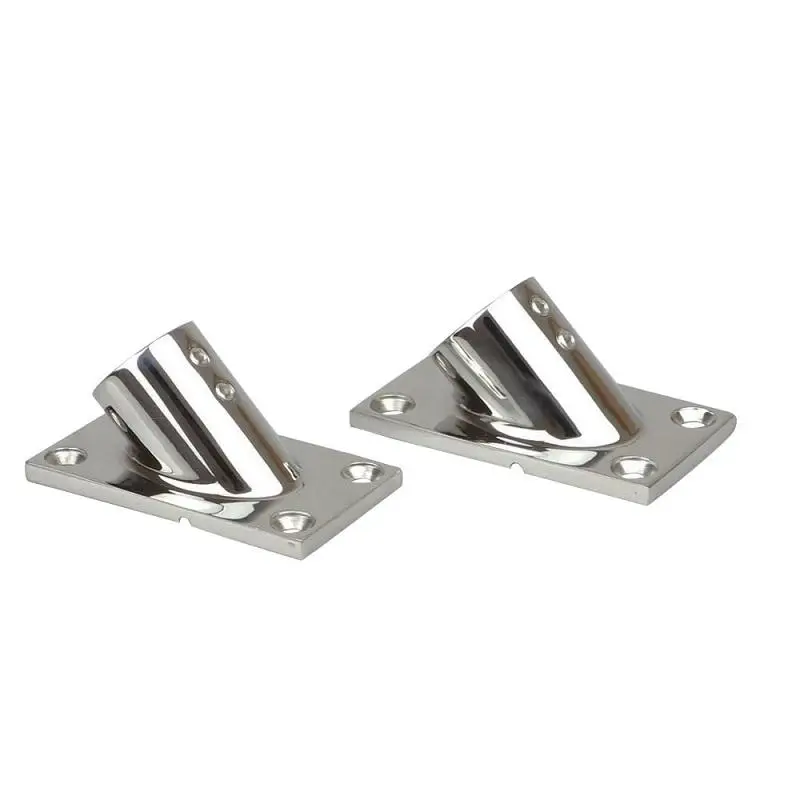
| Polished rail and stanchion fittings | Machining, casting | Guard rails, handrails, ladder structures |
| Custom trim, handles and decorative hardware | Machining, casting, engraving | Interior detail, joinery, feature fittings |
| Bespoke components for refits and new builds | Machining, fabrication | One-off replacement and custom work |
Polished Rail & Stanchion Fittings
Rail fittings combine structural duty with constant visual presence. We machine and cast rail fittings, stanchion bases and tube connectors in 316 stainless steel with mirror-polished or satin finishes. See our polished stainless rail and stanchion fittings for the standard component range.
Interior Hardware & Cabinet Fittings
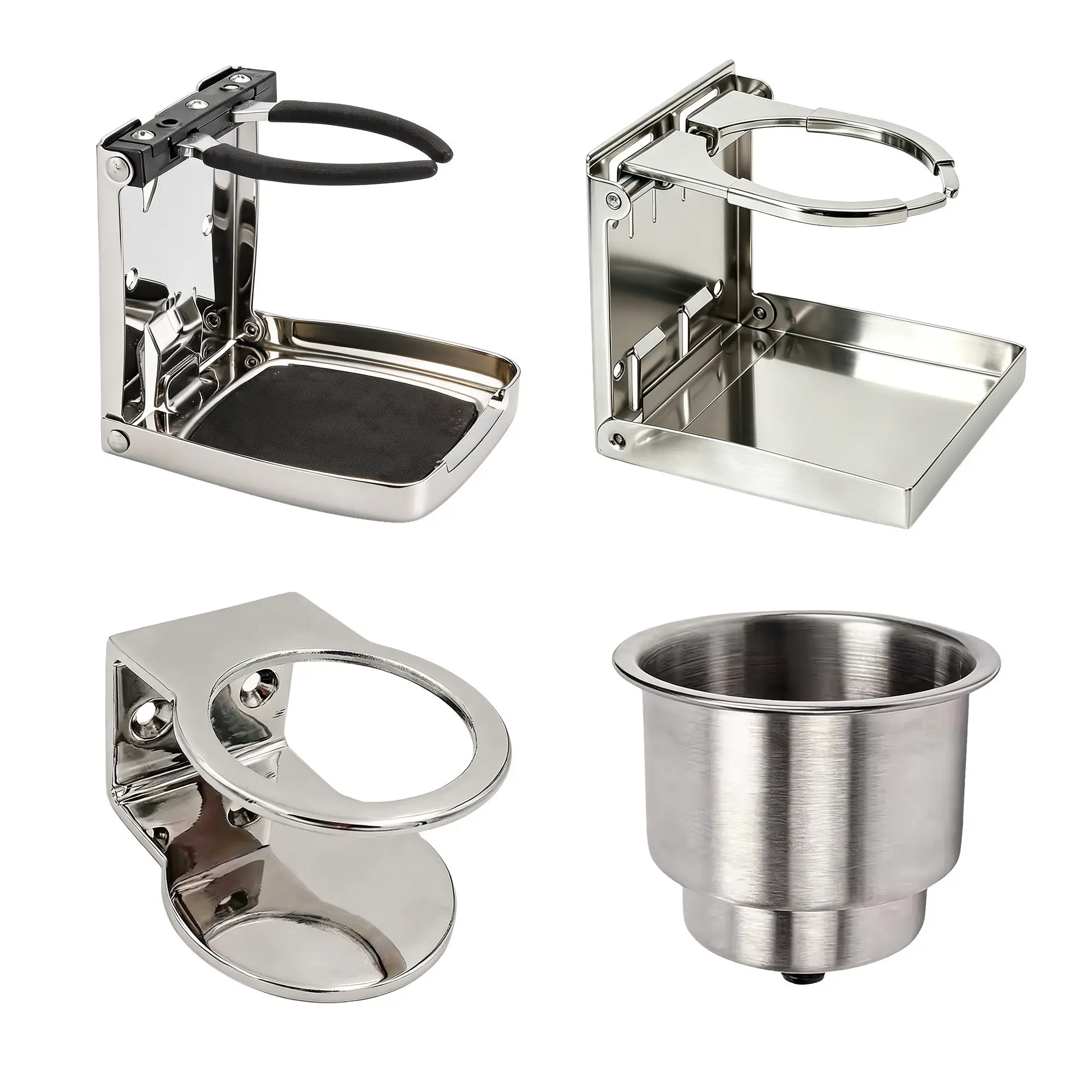
Interior hardware is handled constantly and judged on both mechanism quality and appearance. We produce handles, cabinet fittings, hinged and sliding hardware, and small detail components with finishes matched to the surrounding joinery. See our yacht interior hardware set for the standard range.
Deck Cleats, Hinges & Latches
Deck hardware on a yacht must meet the same structural standard as on any vessel while matching a higher finish specification. We produce cleats, hinges and latches in cast and machined 316 stainless, polished to the specified standard.
Custom Trim, Handles & Decorative Hardware
Some components exist primarily to be seen — trim, escutcheons, feature handles and detail fittings. We machine and cast these in stainless steel, brass and aluminum, with finishes including mirror polish, satin and PVD coating.
Bespoke Components for Refits & New Builds
Refit work often involves a component that no longer exists in a catalogue. We produce one-off and small-batch bespoke parts from a drawing, a sample, or a reference photograph with dimensions measured by the yard.
Materials & High-Specification Finishing
On this page “high specification” means a defined finish requirement — appearance, surface condition and consistency criteria — rather than a general claim about quality. Each of the finishes below is specified and inspected against those criteria.
| Material | Typical use | Available finishes |
|---|---|---|
| 316 / 316L stainless steel | Deck and rail hardware, exposed fittings | Mirror polish, satin, brushed, electropolished |
| 304 stainless steel | Sheltered interior hardware | Satin, brushed, polished |
| Aluminum | Lightweight above-deck parts, structural brackets | Anodized, polished, powder coated |
| Brass and bronze | Traditional-appearance fittings, interior detail | Polished, lacquered, aged |
| Titanium | High-specification visible components | Polished, brushed, anodized |
316 Stainless Steel — Mirror Polished
Type 316 is the default for exposed yacht hardware, machined or cast and finished to the specified polish grade. Mirror polishing both defines the appearance and improves corrosion performance by producing a surface that sheds water rather than retaining deposits.
Aluminum, Brass and Titanium
Anodized aluminum suits components where weight matters, subject to isolating the interface where it meets stainless steel. Brass and bronze are chosen for traditional appearance and take a high polish. Titanium offers high strength with corrosion resistance and a distinctive appearance for high-specification components.
Electropolishing and PVD Coating
Electropolishing removes surface contamination and produces a uniform bright finish while strengthening the passive layer. PVD coating applies a hard, color-stable surface layer, used where visible hardware must resist wear and retain its appearance.
Refit & One-Off Production
Refit work has different economics from production programs. Volumes are low, the part often has to match something already installed, and the schedule is driven by the vessel’s yard period rather than by a production plan.
We handle refit work by treating the sample as the definition. Where an original part is available, we measure from it. Where it is not, we work from a drawing, a photograph with dimensions, or a manufacturer’s specification. The prototype confirms the interpretation before production.
This applies equally to a single replacement fitting and to a set of parts for an interior refit.
How a Custom Yacht Part Program Runs
Prototype Approval Before Batch Production
For yacht hardware we treat prototype approval as a mandatory gate. The prototype carries the production finish, so appearance, edge quality and mechanism feel can all be confirmed before tooling or batch production begins.
Finishing Consistency Across a Set
Where a program involves multiple identical parts, we hold a physical reference sample through production and inspect finished units against it. This is what prevents the visible variation that appears when each unit is assessed independently.
We support OEM manufacturing from your drawings, ODM where we develop the product for you to rebrand, and prototype development for new programs.
Who We Supply
- Yacht builders and shipyards specifying hardware and fittings for new builds
- Interior fit-out companies needing consistent finish across a cabin or vessel
- Refit yards requiring bespoke and replacement components within a yard period
- Marine hardware distributors building a yacht-grade product range under their own label
Founded in 2006, we operate a 1,350㎡ facility with a 28-person team including 12 engineers, producing over 6,000,000 pieces a year for customers in more than 40 countries and regions. Our quality management system is ISO 9001:2015 certified.
Buying Guide: Sourcing Yacht Hardware
Define the finish before the part. On yacht hardware the finish is part of the specification, not a coating applied at the end. Describe it by appearance — mirror, satin, brushed — and provide a physical reference where possible. Verbal descriptions such as “nice polish” do not survive translation into production.
Order a prototype that carries the production finish. A prototype in an unfinished state tests geometry but tells you nothing about final appearance. Require the finish on the prototype so approval is meaningful.
Ask how consistency is held across a set. This is the question that separates suppliers who can serve a yacht program from those who cannot. The answer should involve a reference sample and controlled finishing parameters, not a promise.
Confirm how edges and small radii are finished. These are where finish quality is most visible and where inconsistency appears first. Ask how they are controlled.
Plan around the yard period. Refit schedules are fixed by the vessel, not the factory. Confirm the prototype and production timeline against the actual yard window before committing.
FAQ
How do you achieve consistent finish across a fit-out? By holding a physical reference sample through production and inspecting each finished unit against it, combined with controlled polishing parameters and tooling that does not wear between units. Consistency is a process outcome that has to be designed in, not inspected in at the end.
What is the difference between mirror polishing, electropolishing and PVD coating? Mirror polishing is a mechanical process producing a highly reflective surface. Electropolishing is electrochemical: it removes surface contamination, produces a uniform bright finish and strengthens the passive layer, and it is often specified in addition to polishing. PVD coating deposits a hard, color-stable layer used where visible hardware must resist wear.
Do you accept one-off and low-volume orders? Yes. Refit and bespoke work is a normal part of this line. We produce from a drawing, a physical sample, or a reference photograph with dimensions, and confirm the interpretation at the prototype stage.
Can you match the finish of hardware already installed on a yacht? Yes, whenever a reference part or a clear finish description is available. Send the reference and we will match it, then verify the match on the prototype before production.
Is titanium available as an alternative to stainless steel? Yes. Titanium offers high strength with good corrosion resistance and a distinct appearance, and is used for high-specification visible components. It costs more than stainless steel and is chosen where the application justifies it.
How do you prevent damage to polished surfaces during shipping? Polished components are individually protected with surface film or interleaved packing, and packed to prevent metal-to-metal contact in transit. Export packaging is specified for the finish level of the parts inside.
How does corrosion performance compare between stainless steel and aluminum on a yacht? Stainless steel 316 is considerably more resistant in permanent salt exposure. Anodized aluminum performs well above deck where weight matters, but must be isolated where it contacts stainless steel, or the aluminum will corrode preferentially.
What do you need from me to quote a bespoke part? A drawing or CAD file where available. If not, a physical sample, or photographs with key dimensions. Also tell us the location on the vessel and the finish standard, since both affect the material and finishing route.
Related Products
- Polished Stainless Rail & Stanchion Fittings — mirror-polished 316 rail hardware
- Yacht Interior Hardware Set — cabinet, hinge and detail fittings
Related Applications
Yacht hardware falls under marine and yacht applications, where finish consistency and saltwater exposure are the defining conditions, and under private-label programs where the owner’s or builder’s brand is applied to finished fittings.
Related Resources
- Materials Guide for Automotive & Marine Parts — how aluminum, stainless steel and plastics compare
- How Custom Vehicle Parts Are Made — the process from design review to delivery
- How to Choose a Custom Car Parts Manufacturer — an evaluation checklist that applies to any vehicle line
Request a Quotation
Send your drawing, sample or reference part together with the finish standard and the location on the vessel. We will propose the material and finishing route, produce a prototype carrying the production finish, and quote.
Request a quote — or attach your files using the form on this page. We reply within 24 hours on business days.
Request a quotation
Send your drawing or sample and our engineering team will respond within 24 hours with a quotation.
- Engineering review within 24 hours
- Free DFM (design-for-manufacturability) feedback
- NDA available on request
Your data is encrypted in transit and never shared with third parties.