Custom Motorcycle Parts Manufacturer — CNC Components & Accessories
Custom motorcycle parts, CNC components and accessories for performance, styling and OEM applications.
We manufacture motorcycle parts to your design — CNC-machined levers and controls, frame brackets, foot pegs, handlebar components and styling accessories. Low MOQ and fast prototyping suit aftermarket and performance brands building a new product line.
Motorcycle Parts Manufacturing: Scope & Capabilities
We are a custom motorcycle parts manufacturer working with aftermarket brands, performance parts companies, distributors and OEM suppliers. We take a design — a drawing, a sample, or a concept with dimensions — and turn it into repeatable production that holds its finish and fit across batches.
The motorcycle aftermarket is unusual in how much weight it places on appearance relative to other vehicle categories. A lever must function correctly, but it also has to look right on a specific bike and match the rest of the customer’s product range. That is why anodizing quality and color consistency matter as much here as dimensional accuracy.
Categories We Manufacture
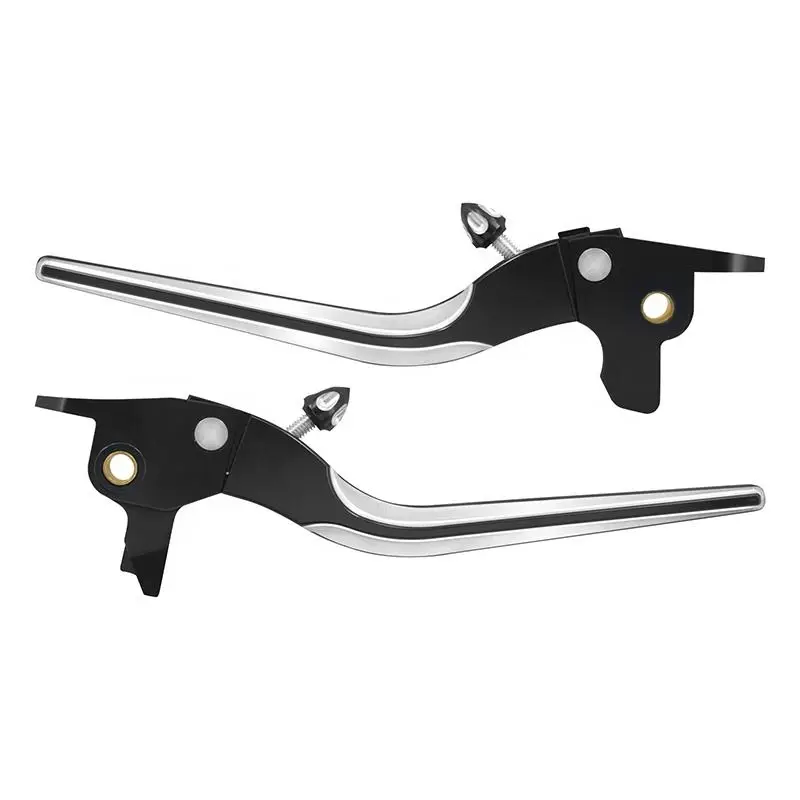
- Controls and levers — brake and clutch levers, lever assemblies and control components
- Structural brackets — frame brackets, mounting hardware and reinforcement parts
- Rider interface components — foot pegs, rearsets, peg mounts and adjustment hardware
- Handlebar components — bar ends, clamps, risers and accessory mounts
- Styling and detail parts — covers, caps, badges and machined detail components
How a Custom Motorcycle Part Program Runs
- You send a drawing, CAD file, physical sample or a concept with key dimensions.
- Our engineers review manufacturability, material and finishing options.
- We prototype so fit and finish can both be checked on the actual motorcycle.
- Production runs with in-process checks and finish verified against the approved sample.
- Every batch passes final inspection before packing and export.
For aftermarket programs the prototype is usually also the market test — a small pilot run lets a brand trial a SKU before committing to volume.
Two Kinds of Motorcycle Part: Function and Appearance
Almost every motorcycle component we produce sits somewhere on a scale between carrying load and carrying the brand. Knowing where your part sits determines how it should be specified.
Parts That Carry Load
Frame brackets, foot pegs and lever assemblies transmit force from the rider or from the road into the motorcycle structure. For these components the priorities are material grade, section geometry, joint design and consistent heat treatment or forming process. Surface finish matters for corrosion protection, but it is not the primary requirement.
We hold load-bearing components to the approved specification across repeat batches without material substitution.
Parts That Carry the Brand
Bar ends, covers, caps and detail components exist substantially for appearance. Here the priorities invert: anodizing quality, color consistency between units, edge sharpness on machined features and the absence of visible tool marks become the specification.
Both categories are produced on the same equipment, but they are inspected against different criteria — and it is worth agreeing which applies to your part at the outset.
Motorcycle Components We Manufacture
| Component group | Typical process | Common application |
|---|---|---|
| CNC machined levers and controls | CNC milling and turning | Brake and clutch control, adjustment hardware |
| Frame brackets and mounting hardware | CNC machining, fabrication | Accessory mounting, structural fixing |
| Foot pegs, rearsets and fittings | CNC machining, assembly | Rider interface and position adjustment |
| Handlebar components and accessory mounts | CNC machining, anodizing | Bar ends, clamps, risers, mount adapters |
| Styling and performance components | Machining, engraving, finishing | Visual and performance upgrades |
CNC Machined Levers & Controls
Levers are among the most visible and most handled parts on a motorcycle. We machine levers and control components in aluminum and titanium, with anodizing or polishing applied to the specified appearance. See our CNC machined motorcycle levers for the standard component range.
Frame Brackets & Mounting Hardware
Frame brackets transfer load into the chassis and must hold their geometry across batches. We machine brackets and mounting hardware to drawing, and can support weight-reduction work where the customer wants a lighter component without reducing the safety margin.
Foot Pegs, Rearsets & Fittings
Rider interface components combine structural duty with a visible surface. We machine pegs, rearset components and adjustment hardware, with finishes specified for the wear they will see from boot contact.
Handlebar Components & Accessory Mounts
Bar ends, clamps, risers and mount adapters are usually appearance-critical and produced in sets. Color consistency between units in a set is inspected against a reference sample, and bracket geometry is held to drawing so an accessory fits the bar diameter it was designed for.
Materials for Motorcycle Components
| Material | Strength-to-weight | Typical use | Finishing |
|---|---|---|---|
| Aluminum 6061 | Good | Brackets, mounts, adapters, pegs | Anodizing, powder coating, polishing |
| Aluminum 7075 | High | Levers, structural load-bearing parts | Anodizing (hard anodize where available), polishing |
| Titanium | High, with corrosion resistance | High-specification levers and visible parts | Polishing, brushed, anodizing |
| Stainless steel | High | Fasteners, pins, small hardware | Polishing, passivation |
| Engineering plastics | Low | Covers, clips, protective components | As-molded, UV-stabilized |
Aluminum
Aluminum 6061 is the workhorse for brackets, mounts and adapters, offering a good balance of strength, machinability and cost with excellent anodizing response. Aluminum 7075 is used where higher strength is required — typically levers and load-bearing structural components — and is specified when the application justifies the higher material cost.
Titanium
Titanium is chosen for high-specification visible components where its combination of strength, corrosion resistance and distinctive appearance is worth the cost. It machines differently from aluminum and requires different tooling and parameters, which affects lead time and price.
Stainless Steel
Stainless steel is used for fasteners, pins, pivot hardware and small components where corrosion resistance and durability matter more than weight.
Anodizing, Finishing and Brand Marking
| Finish | Appearance | Best for |
|---|---|---|
| Type II anodizing | Colored, satin to gloss | Most aluminum parts, wide color range |
| Hard anodizing | Dark, matte, wear-resistant | High-wear surfaces, foot pegs, sliding parts |
| Polishing | Bright, reflective | Uncolored aluminum and stainless parts |
| Powder coating | Opaque, durable | Brackets and less dimensionally critical parts |
| PVD coating | Color-stable, hard | High-specification visible components |
| Laser engraving | Contrast marking | Branding, logos, part identification |
Anodized Colors
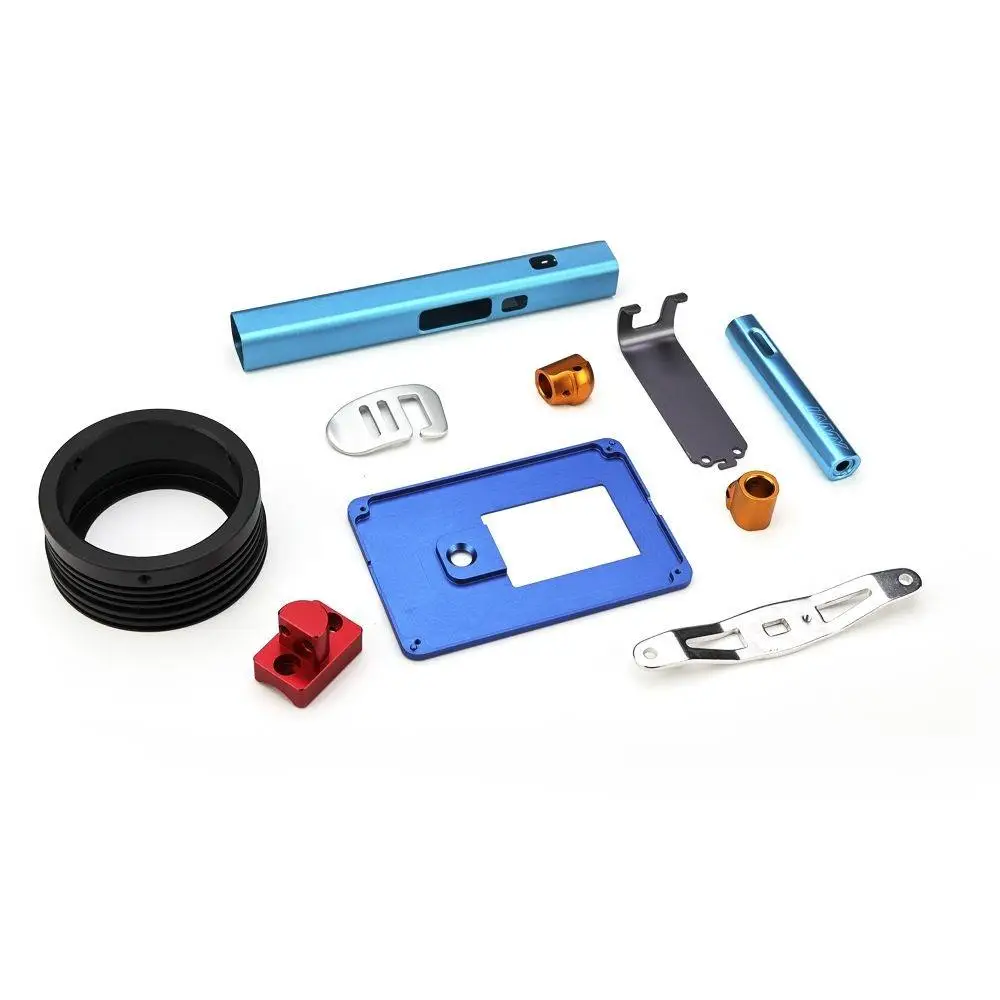
Anodizing is the standard finish for aluminum motorcycle components because it provides both corrosion protection and color while preserving the machined surface underneath. Color is specified to a reference sample, and consistency between units in a batch is inspected against it.
Laser Engraving
Laser engraving applies the customer’s logo or part marking after finishing, so it does not interrupt the protective layer.
How a Custom Motorcycle Part Program Runs
Aftermarket Product Development
Most motorcycle programs start with a brand that has a product idea rather than a finished drawing. We can support either path: manufacturing from a complete specification, or developing the component from a concept and requirements.
Low-MOQ Pilot Runs
The aftermarket rewards trialling a product before committing. Low MOQ makes it practical to run a pilot batch, evaluate market response, and scale only what sells. Tooling and drawings are held so the follow-up order matches the pilot.
We support OEM manufacturing from your drawings, ODM where we develop the product for you to rebrand, and prototype development for new programs.
Who We Supply
- Aftermarket and performance brands developing their own parts range
- Parts distributors and retailers building a private-label product line
- OEM and tier-2 suppliers outsourcing specific machined components
- Custom builders and workshops needing one-off or small-batch machined parts
Founded in 2006, we operate a 1,350㎡ facility with a 28-person team including 12 engineers, producing over 6,000,000 pieces a year for customers in more than 40 countries and regions. Our quality management system is ISO 9001:2015 certified.
Buying Guide: Sourcing Motorcycle Parts
Decide which parts are structural before you specify materials. A frame bracket and a bar end can both be machined aluminum, but they should not be specified or inspected the same way. Sorting parts into load-bearing and appearance-led groups at the start prevents both over-engineering and safety risk.
Specify color by reference, not by name. Anodized color varies with alloy, surface preparation and process parameters. “Red” describes nothing. Send a physical reference or a defined color target, and require the prototype to be anodized so the color can be approved before production.
Confirm consistency across a set. Motorcycle accessories are often sold in matched pairs or sets. Ask how color and finish consistency between units is controlled and inspected.
Check the surface expectations for your part. Machined surfaces can be left with visible tool marks, or finished to remove them. This affects both cost and appearance, and should be agreed before production rather than discovered at delivery.
Start with a pilot batch. Low MOQ exists to let you test. The cheapest place to find a design or finish problem is in a small batch, before tooling and inventory commitments.
FAQ
What materials do you machine for motorcycle parts? Aluminum 6061 and 7075, titanium, stainless steel and engineering plastics. Aluminum is the default for most components; 7075 and titanium are used where higher strength or a specific appearance justifies the cost.
How do you ensure anodized color matches my brand? By working from a physical reference or a defined color target, and by anodizing the prototype so the color is approved before production. Color is then inspected against that reference on the production batch, since anodizing result varies with alloy and process parameters.
Can you apply our logo to the parts? Yes. Laser engraving is the usual method and is applied after finishing so the protective layer stays intact. Cast-in logos are available for die-cast components.
Do you support low-MOQ pilot runs for a new aftermarket line? Yes. Low MOQ and small batch production are normal for this line, because aftermarket brands typically want to test a product before committing to volume. Tooling and drawings are held so follow-up orders match the pilot batch.
How do you handle quality on load-bearing parts like levers and brackets? We treat the approved specification as fixed: the same drawing, material and inspection criteria apply to every batch, without substitution. Dimensional inspection is performed against the approved sample or drawing.
What is the difference between Type II and hard anodizing? Type II anodizing produces a colored, decorative and moderately protective layer and is the standard finish for most aluminum motorcycle parts. Hard anodizing produces a thicker, darker, more wear-resistant surface used on high-wear components such as foot pegs and sliding parts, with a more limited color range.
How fast can you produce a prototype? Standard prototypes are typically 5–10 business days. Parts requiring new tooling may take 3–4 weeks. We confirm the schedule in the quotation.
Can you produce a part I already sell, but from a different supplier? Yes. We can work from a drawing or from a physical sample, and we will confirm dimensions and material with you before production so the result matches what you already sell.
Related Products
- CNC Machined Motorcycle Levers — machined and anodized lever components
- Motorcycle Frame Brackets — frame and mounting brackets to drawing
Related Applications
Motorcycle parts are most often specified for performance and tuning builds, where finish quality is part of the product, and for private-label programs where the customer’s brand is applied to the finished component.
Related Resources
- Materials Guide for Automotive & Marine Parts — how aluminum, stainless steel and plastics compare
- How Custom Vehicle Parts Are Made — the process from design review to delivery
- How to Choose a Custom Car Parts Manufacturer — an evaluation checklist that applies to any vehicle line
Request a Quotation
Send your drawing, sample or concept with key dimensions, together with the finish and color target. We will propose material and finishing, produce a prototype for approval, and quote.
Request a quote — or attach your files using the form on this page. We reply within 24 hours on business days.
Request a quotation
Send your drawing or sample and our engineering team will respond within 24 hours with a quotation.
- Engineering review within 24 hours
- Free DFM (design-for-manufacturability) feedback
- NDA available on request
Your data is encrypted in transit and never shared with third parties.