Custom Bicycle & E-Bike Parts Manufacturer — Two-Wheeler Components
Custom bicycle and e-bike components, machined parts and accessories for brands and aftermarket builders.
We manufacture bicycle and e-bike components with precision machining and lightweight materials — stems, handlebars, motor mounts, seatpost clamps and machined parts. We support brands and aftermarket builders with custom development, anodized finishes and low MOQ.
Bicycle & Two-Wheeler Parts Manufacturing: Scope & Capabilities
We are a custom bicycle parts manufacturer working with bicycle brands, e-bike manufacturers, aftermarket parts companies and distributors. We take a design or a component requirement and turn it into production that holds its weight, strength and finish targets across batches.
Two-wheeler components are judged against a harder constraint than most vehicle parts: weight. On a bicycle, every gram in a component is a gram the rider carries uphill. That makes material selection and geometry optimization the central engineering questions, not refinements applied afterwards.
Categories We Manufacture
- Cockpit components — stems, handlebars, bar ends and clamp hardware
- E-bike structural parts — motor mounts, battery brackets, frame adapters and mounting plates
- Seat and post hardware — seatpost clamps, saddle rail hardware and adjustment fittings
- Accessory mounts — light mounts, rack brackets, fender mounts and adapter plates
- Machined components — custom turned and milled parts to drawing
How a Custom Two-Wheeler Part Program Runs
- You send a drawing, CAD file, physical sample or a concept with key dimensions.
- Our engineers review the design against weight, strength and interface requirements.
- We prototype so fit can be verified on the actual frame or assembly.
- Production runs with in-process checks, with anodized color verified against the approved sample.
- Every batch passes final inspection before packing and export.
For e-bike components, the motor mount interface is usually the critical dimension. A mount that is dimensionally correct but positioned slightly off loads the motor housing unevenly, so we verify fit on the frame rather than on a drawing alone.
Why Weight and Strength Both Matter
Material Choice Drives Weight
The single largest lever on component weight is the material. Aluminum typically replaces steel at roughly a third of the density, which is why almost every weight-sensitive bicycle component is aluminum or a composite. Titanium offers a further improvement in strength-to-weight and corrosion resistance at a higher cost.
Geometry Drives Weight as Much as Material
Two components in the same alloy can differ substantially in weight depending on how material is distributed. Removing material from low-stress regions while maintaining section in load paths reduces weight without reducing strength — this is why machined components can outperform cast or formed equivalents at the same weight.
Where Strength Cannot Be Traded Away
Not every component can be lightened. Stem bodies, handlebar clamping areas, motor mount interfaces and seatpost clamps all carry loads where failure has immediate consequences for the rider. For these components we work to the strength requirement first and optimize weight only within it.
We do not publish fatigue life or load ratings for these components, because the correct value depends on your geometry, material and the load case you are designing to. Send the requirement and we will work from it.
Components We Manufacture
| Component group | Typical process | Common application |
|---|---|---|
| Stems, handlebars and cockpit hardware | CNC machining, anodizing | Rider interface, steering assembly |
| E-bike motor mounts and brackets | CNC machining, fabrication | Motor and drive unit mounting |
| Seatpost clamps and fittings | CNC machining | Saddle height adjustment, post retention |
| Accessory mounts and adapters | CNC machining | Lights, racks, fenders, accessories |
| Custom machined and anodized parts | Turning, milling, finishing | Application-specific components |
Stems, Handlebars & Cockpit Hardware
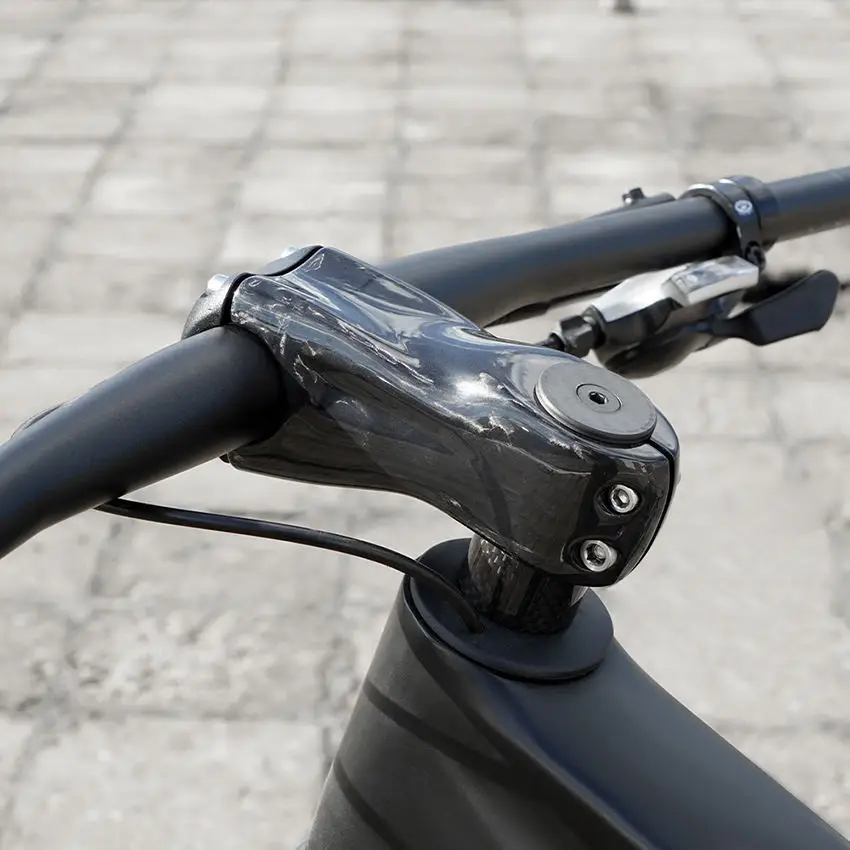
Cockpit components are both structural and highly visible, which makes them the most demanding category in this line. We machine stems and cockpit hardware in aluminum alloy, with anodizing applied in custom colors for brand differentiation. See our bicycle stem and handlebar components for the standard range.
E-Bike Motor Mounts & Brackets
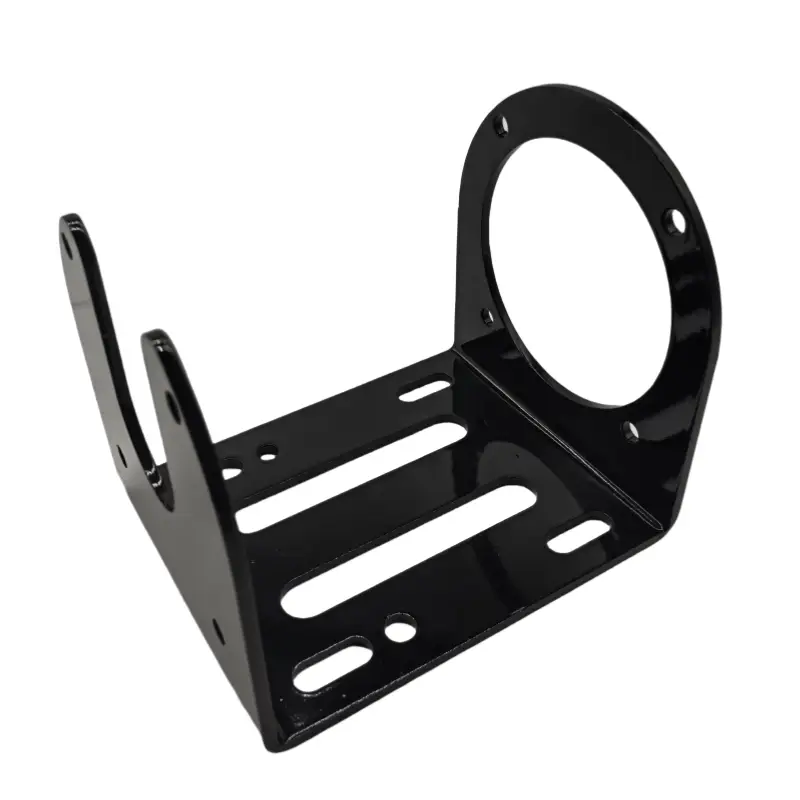
Motor mounts carry the drive unit’s load into the frame, so the interface geometry and material section both matter. We machine motor mounts, battery brackets and frame adapters to drawing, verifying the interface on the frame assembly rather than on a drawing alone. See our e-bike motor mounts and brackets for the standard range.
Seatpost Clamps & Fittings
Small components with a clear structural duty. We machine seatpost clamps and adjustment hardware in aluminum, with finishes specified for the clamp’s exposure and the loads applied by the rider.
Accessory Mounts & Adapters
Light mounts, rack brackets, fender mounts and adapter plates are usually produced in sets and are appearance-sensitive. We machine mounts and adapters with anodized finishes matched across the set.
Materials for Bicycle & E-Bike Components
| Material | Weight | Typical use | Finishing |
|---|---|---|---|
| Aluminum 6061 | Low | Stems, mounts, brackets, adapters | Anodizing, powder coating |
| Aluminum 7075 | Low, higher strength | Load-bearing structural components | Anodizing (including hard anodize) |
| Titanium | Low, high strength | High-specification visible and structural parts | Polishing, brushed, anodized |
| Stainless steel | Moderate | Fasteners, pins, small hardware | Polishing, passivation |
| Engineering plastics | Very low | Covers, clips, low-load components | As-molded, UV-stabilized |
Aluminum Alloys
Aluminum is the default for two-wheeler components. 6061 offers a good balance of strength, machinability, weldability and anodizing response, and covers most brackets, mounts and adapters. 7075 offers significantly higher strength for load-bearing components, though it is less weldable and costs more, which makes it a targeted choice rather than a general one.
Titanium
Titanium offers high strength with low weight and good corrosion resistance, and produces a distinctive appearance. It machines more slowly than aluminum, requires different tooling and parameters, and costs more — chosen where the application or the product positioning justifies it.
Anodizing, Color and Brand Marking
| Finish | Appearance | Typical use |
|---|---|---|
| Type II anodizing | Colored, satin to gloss | Stems, mounts, adapters, cockpit parts |
| Hard anodizing | Dark, matte, wear-resistant | High-wear contact surfaces |
| Powder coating | Opaque, wide color range | Brackets and less dimensionally critical parts |
| Polishing | Bright, reflective | Titanium and stainless components |
| Laser engraving | Contrast marking | Branding, size and specification marking |
Custom Anodized Colors
Anodized color is one of the main ways bicycle and e-bike brands differentiate a product line. We anodize to a color target and inspect the production batch against an approved reference, because anodizing result varies with alloy composition, surface preparation and process parameters.
Laser Branding
Laser engraving applies the brand mark, size marking or specification text after finishing, so the protective anodized layer is not interrupted.
How a Custom Two-Wheeler Part Program Runs
New Product Development
Many two-wheeler programs begin with a brand that has a product concept and a target weight, rather than a finished drawing. We can work from either: producing to a complete specification, or developing the component from requirements including the weight target and load case.
Low-MOQ Pilot Production
Bicycle and e-bike product lines are often seasonal and model-driven, which makes pilot production valuable. Low MOQ lets a brand trial a component, evaluate sales, and scale only what performs. Drawings and tooling are held so follow-up orders match the pilot.
We support OEM manufacturing from your drawings, ODM where we develop the product for you to rebrand, and prototype development for new programs.
Who We Supply
- Bicycle and e-bike brands developing components under their own name
- Aftermarket parts companies building a machined component range
- E-bike manufacturers needing motor mounts, brackets and frame adapters
- Distributors and importers sourcing components for regional markets
Founded in 2006, we operate a 1,350㎡ facility with a 28-person team including 12 engineers, producing over 6,000,000 pieces a year for customers in more than 40 countries and regions. Our quality management system is ISO 9001:2015 certified.
Buying Guide: Sourcing Bicycle & E-Bike Components
State the weight target and the load case together. A weight target without a strength requirement is not a specification. The two together tell a manufacturer what material and geometry to work toward, and prevent both an overweight component and an unsafe one.
Send the frame interface dimensions, not only the component drawing. For e-bike mounts and cockpit hardware, failure usually happens at the interface. Confirm the mating dimensions you are designing to and, where possible, prototype against the actual frame.
Approve color on an anodized prototype. Anodized color depends on alloy and process, and cannot be judged from a color swatch or a description. Require the prototype to carry the production finish.
Ask how a set is matched. Components sold as a set or a range need consistent color and finish between units. Ask whether a reference sample is held through production.
Confirm the follow-up order path. Seasonal product lines often reorder a successful component. Ask whether drawings and tooling are retained so the second order matches the first.
FAQ
How do weight targets influence material and geometry? The target sets the design direction but cannot be met by material choice alone. We look at where material can be removed from low-stress regions while maintaining section in the load paths, then select the alloy that meets the remaining strength requirement at the lowest weight.
What are the structural requirements for e-bike motor mounts? The mount transfers the drive unit’s load into the frame, so the interface geometry, material section and fastening arrangement all matter. We verify fit on the frame assembly, because a mount that is dimensionally correct but slightly mispositioned will load the motor housing unevenly.
Can you match a specific anodized color for our brand? Yes. Send a physical reference or a defined color target, and we will anodize a prototype so the color can be approved before production. Anodized color varies with alloy and process parameters, so approval on an actual anodized part is more reliable than approval on a swatch.
Do you work with 7075 aluminum? Yes. We machine 7075 for load-bearing components where the higher strength justifies the higher material cost and the more demanding machining. For most brackets, mounts and adapters, 6061 provides a better balance of properties and cost.
Can you produce low-MOQ pilot runs for a new bike model? Yes. Low MOQ and small batch production are standard for this line, because bicycle and e-bike product lines are often seasonal. Tooling and drawings are held so a follow-up order matches the pilot batch.
How do you control quality on load-bearing components? We hold the approved specification fixed and produce every batch to the same drawing, material and inspection criteria, without substitution. Dimensional inspection is performed against the approved sample or drawing.
How fast can you produce a prototype? Standard prototypes are typically 5–10 business days. Components requiring new tooling may take 3–4 weeks. We confirm the schedule in the quotation.
Can you replicate a component we currently source elsewhere? Yes. We can work from a drawing or from a physical sample, and we will confirm dimensions and material with you before production so the result matches the component you already sell.
Related Products
- Bicycle Stem & Handlebar Components — machined and anodized cockpit hardware
- E-Bike Motor Mounts & Brackets — motor mounts and frame adapters to drawing
Related Applications
Two-wheeler components fall under two-wheeler and e-bike applications, where weight optimization and low-MOQ pilot production are the defining requirements, and under private-label programs where the customer’s brand is applied to the finished component.
Related Resources
- Materials Guide for Automotive & Marine Parts — how aluminum, stainless steel and plastics compare
- How Custom Vehicle Parts Are Made — the process from design review to delivery
- How to Choose a Custom Car Parts Manufacturer — an evaluation checklist that applies to any vehicle line
Request a Quotation
Send your drawing, sample or concept together with the weight target, the load case and the color reference. We will propose material and geometry, produce a prototype carrying the production finish, and quote.
Request a quote — or attach your files using the form on this page. We reply within 24 hours on business days.
Request a quotation
Send your drawing or sample and our engineering team will respond within 24 hours with a quotation.
- Engineering review within 24 hours
- Free DFM (design-for-manufacturability) feedback
- NDA available on request
Your data is encrypted in transit and never shared with third parties.